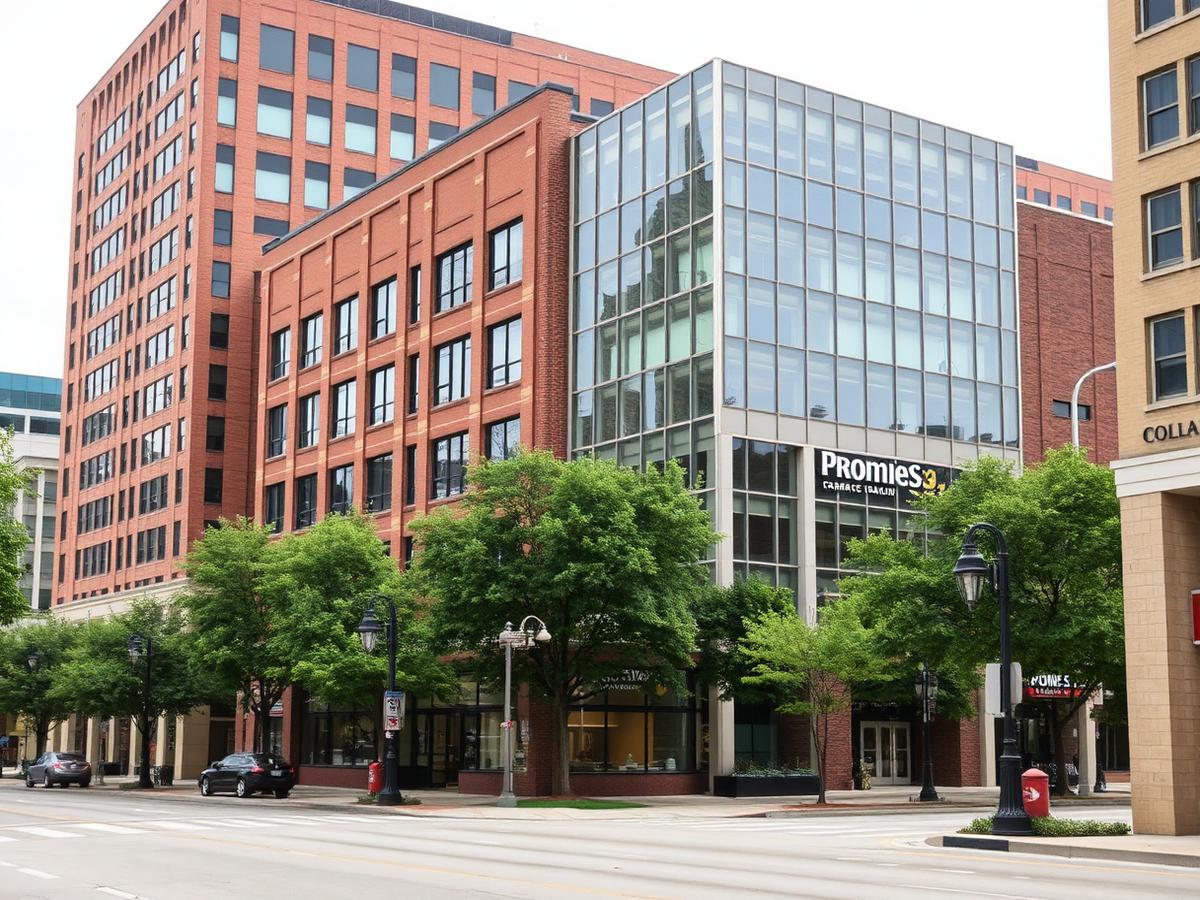
Cannabis CPA Services in Columbia
Cannabis accounting in Columbia is rarely about a single transaction type. A dispensary here has to record retail sales, regulated inventory movement, discounts, cash handling and vendor purchases correctly and consistently, month after month, before that data is any use for tax preparation or management decisions. A general bookkeeping service can post transactions; it is a different job to carry inventory at cost through a regulated supply chain and produce cost of goods sold that a preparer, lender or examiner would accept.
We serve cannabis operators located in Columbia and throughout the surrounding central Missouri market. There is no Missouri Cannabis CPA office in Columbia — the practice works remotely and continuously, connected to your point-of-sale system, seed-to-sale platform and accounting software rather than showing up once a month to review a folder of receipts. For a market the size of Columbia, that arrangement usually fits better than a local walk-in relationship, because the work happens on the same schedule your business does.
Most new Columbia engagements start in one of a few places: a books cleanup after a first year of operations that outran the bookkeeping, a request for reporting once a second location or a wholesale relationship is added, or a push to get tax-ready ahead of a filing deadline. Each starts with the same review — what the books currently say about inventory, and whether that can be reconciled to what actually happened in the business.
Cannabis Accounting for Columbia Businesses
For a Columbia cannabis business, accounting is the discipline of turning several different data sources into one reliable set of numbers. Point-of-sale software records retail activity, a seed-to-sale system tracks regulated movement, and a bank account records cash flow that is often more manual here than in most other industries because of limited banking relationships. None of those systems alone tells you whether the business made money; the accounting function has to combine them.
The sequence we use with Columbia clients treats each stage as a control on the next one: source data from operations, recorded transactions, reconciled balances, financial statements, and finally the decision support that comes from reading those statements correctly. A gap anywhere in that chain — an unreconciled bank account, an inventory balance nobody has verified — undermines everything built on top of it.
Columbia operators who run more than one entity, such as a retail LLC paired with a separate management or real estate company, need that chain applied to each entity and then consolidated deliberately, with intercompany transactions identified and removed rather than left to inflate the combined numbers.
How the work connects
Cannabis Bookkeeping in Columbia
Bookkeeping for a Columbia cannabis business covers the routine ledger work — bank reconciliation, accounts payable, payroll journal entries, fixed asset tracking — and the parts that require more attention: recording inventory receipts and transfers at cost, keeping an inventory subledger that agrees with the general ledger, and closing each month on a schedule rather than catching up during tax season.
Cash control is a recurring theme for retail operators in this market. Because cannabis retail still runs on a heavier cash mix than most industries, the accounting has to prove that register totals, physical counts, deposits and bank statements all agree. Left unreconciled, small daily discrepancies compound into a real problem by year-end, both for financial accuracy and for tax exposure.
Cleanup work is common for Columbia operators who opened during a busy stretch and let the books slip. A typical project rebuilds inventory balances from receipts and counts, reclassifies expenses that were booked directly to cost of goods sold without documentation, and reruns the close for prior months so the current-year starting point can be trusted.
Full statewide detail: cannabis bookkeeping.
Dispensary Accounting in Columbia
Dispensary accounting in Columbia has to hold up under retail volume and regulated inventory at the same time. Sales by category need to come cleanly out of the point-of-sale system, discounts and returns need consistent treatment, sales tax collected needs to sit as a liability rather than get mixed into revenue, and cash needs a traceable path from the drawer to the deposit slip. On the cost side, received product has to be valued, waste and shrink have to be documented, and cost of goods sold has to come from inventory activity rather than from what vendors were paid that month.
As Columbia operators add a second location or expand into wholesale, location-level reporting stops being optional. A single combined profit and loss statement can mask a store that is losing margin behind one that is carrying the group. That visibility depends on the chart of accounts and location coding being set up correctly from the start, not reconstructed later from memory.
With that structure in place, the useful questions become answerable: which product category is quietly eroding margin, whether a discount strategy is buying real volume or just moving revenue around, and how inventory turns and working capital compare across locations.
Retail money trail
Store margin
NET SALES − COGS = GROSS PROFIT · GROSS PROFIT ÷ NET SALES = GROSS MARGIN %
Full statewide detail: dispensary accounting.
280E Tax Planning for Columbia Cannabis Businesses
Where Section 280E applies, tax planning and accounting cannot be separated. The deductibility of costs depends heavily on how inventory and cost of goods sold are classified, and that classification is only as strong as the records behind it. Columbia operators who leave this until filing season often find that the support they need should have been built during the year, not reconstructed afterward.
Our approach is to build that support as the year goes, not after it ends: a consistent inventory costing method, cost allocations documented when they are made, and workpapers that connect the trial balance to the filed return. For businesses subject to Section 280E, that ongoing documentation is what separates a defensible filing position from an expensive dispute.
Federal tax treatment of cannabis businesses has changed before and could change again. We do not build a Columbia client's planning around a guess about future treatment. We build records that support the current position clearly and that can be revisited if the treatment shifts, and we raise that possibility with clients as part of regular planning rather than waiting for it to become urgent.
Full statewide detail: 280E tax planning.
Cannabis Tax Preparation in Columbia
Tax preparation for a Columbia cannabis business begins with a completed year-end close: a finalized trial balance, a physical inventory count reflected in the books, cost of goods sold that can be supported line by line, payroll reconciled to filed payroll tax returns, and fixed assets and loan balances agreed to source documents.
From that foundation we build the workpapers a return depends on — inventory rollforward, cost of goods sold computation, book-to-tax adjustments, and ownership or basis detail — and prepare the return from records that trace back to source documents rather than from estimates made under deadline pressure.
Columbia operators who come to us mid-year with incomplete books get a combined plan: the cleanup and the tax preparation are scoped together so there is a single timeline instead of two competing deadlines.
Full statewide detail: cannabis tax preparation.
Fractional CFO Services for Columbia Cannabis Operators
Many Columbia operators reach a stage where the monthly books are solid but the bigger decisions — a second location, added wholesale capacity, a new product line — are being made without financial support behind them. Fractional CFO work fills that gap: budgeting, rolling cash forecasts, management reporting, scenario planning, working-capital review and margin analysis delivered on a repeating schedule.
In a mid-sized regional market like Columbia, the recurring questions tend to be about expansion economics: does a second retail location actually improve group profitability, or does it just add overhead and dilute management attention? What happens to cash if a build-out is delayed a quarter? What margin does the current cost structure require to fund growth internally rather than through outside financing?
None of that analysis is useful if it is built on unreliable numbers, which is why fractional CFO work at Missouri Cannabis CPA is layered on top of the accounting function rather than sold separately from it.
Financial leadership stack
Full statewide detail: fractional CFO services.
Cannabis Cash Flow Planning in Columbia
Cash flow planning is a genuine priority for Columbia cannabis operators because the cost cycle in this industry is unforgiving — product has to be purchased or produced before it generates any revenue, payroll runs on its own schedule regardless of sales, and financing options remain narrower than in most other industries. Businesses that are profitable on paper can still run out of cash if the timing is not modeled.
The core tool is a rolling 13-week cash forecast: expected collections and receipts on one side, and inventory purchases, payroll, rent, taxes, debt service and capital spending on the other. Comparing the forecast to actual results each week, and explaining the variance, is what turns the exercise into something management actually relies on.
For Columbia operators running or planning a second location, we build the forecast at the entity or location level and then combine it, because group cash can look adequate on paper while a single store or entity is short on any given week.
Weekly roll-forward
BEGINNING CASH + CASH IN − CASH OUT = ENDING CASH
Full statewide detail: cash flow planning.
Cannabis Payroll Accounting in Columbia
Payroll is typically one of the largest recurring costs a Columbia cannabis operator carries, and the accounting behind it has to be more than a monthly journal entry. That means reconciling gross wages, employer taxes and benefits to the payroll provider's reports, clearing payroll liabilities as they are actually paid, and coding labor by function and by location so retail labor, production labor and administrative labor can be told apart.
That coding is what makes production labor usable for inventory costing later. If wages are lumped into one general account, the business loses the ability to build an accurate cost per unit, which weakens both margin analysis and inventory valuation.
We reconcile payroll activity into the general ledger and support the reporting built on top of it; day-to-day payroll processing stays with your chosen provider.
Full statewide detail: cannabis payroll accounting.
Cannabis Inventory Accounting in Columbia
Inventory sits at the center of cannabis accounting, and for Columbia operators it is usually the first place we look. Four numbers need to agree: what the operational system shows on hand, what a physical count actually finds, what the accounting records carry as a value, and what the general ledger reports. Small differences happen; unexplained, uncorrected differences are a warning sign.
Getting this right means applying a consistent valuation method, recording receipts and transfers at cost, documenting waste and shrink as it occurs, and supporting every ending balance with a physical count. Cost of goods sold then follows directly from that work, rather than being backed into as a plug figure at year-end.
For Columbia operators moving product between a growing footprint of locations, transfer accounting needs to be handled deliberately, or inventory value quietly migrates between stores and undermines location-level margin reporting.
Inventory must agree across four places
COGS build
BEGINNING INVENTORY + APPLICABLE INVENTORY ACTIVITY − ENDING INVENTORY = COGS
Full statewide detail: inventory accounting.
Metrc Reconciliation for Columbia Cannabis Businesses
Seed-to-sale tracking and financial accounting answer different questions, and Columbia operators sometimes assume one can stand in for the other. The regulated system tracks units and movement; the accounting system tracks dollars and reported results. Where those two views diverge without explanation, both the financial statements and the regulatory record are at risk.
Reconciliation work compares the regulated quantities against point-of-sale or production data, against physical counts, and against the accounting inventory balance, then traces the differences to a cause — timing, documented waste, a transfer recorded in one system but not the other, or a genuine loss. Each cause leads to a different fix, and not every fix is an accounting entry.
We are not affiliated with any seed-to-sale software vendor, and this work is not system administration — it is making sure the financial records and the regulatory record tell a consistent story.
Two different systems
METRC / SEED-TO-SALE ≠ FINANCIAL ACCOUNTING SYSTEM
One tracks regulated units and movement. The other carries dollars, valuation and reported results. Both have to tell the same story.
Full statewide detail: Metrc reconciliation.
Cultivation Accounting in Columbia
Cultivation operations in and around Columbia carry a production cost structure that has to be captured before any flower is sold: labor in the grow, nutrients and supplies, utilities, facility costs and equipment depreciation, and the overhead that supports the operation. Those costs need to attach to inventory as it moves through the grow cycle rather than get expensed immediately.
That capture is what makes a real cost-per-unit figure possible. Without it, a cultivator can see total revenue and total spending but cannot say what a pound actually cost to produce, which room or cycle performed better, or whether a change in inputs paid for itself in yield.
Where a Columbia operator runs cultivation and retail under related entities, transfer pricing between them has to be set and documented deliberately, or one side of the business ends up showing a distorted margin at the other's expense.
Full statewide detail: cultivation accounting.
Cannabis Manufacturing Accounting in Columbia
Manufacturing and infused-product operations serving the Columbia market add raw material inventory, work in process during production, and finished goods, each carried at its own value. Production labor and manufacturing overhead need to be allocated to what was actually produced, not expensed as a general period cost, or the reported product cost understates what it really took to make.
Yield tracking is the piece that gets skipped most often. Input quantity, output quantity and loss should be recorded for each production run so cost per unit can be calculated and compared over time. When a batch is split across multiple finished SKUs, the cost needs to follow that split accurately.
Done consistently, this produces a real cost per product — something that supports pricing and wholesale decisions, instead of a single blended average that hides which products are actually profitable.
Full statewide detail: manufacturing accounting.
Cannabis Financial Reporting in Columbia
Financial reporting for a Columbia operator should be a monthly package, not a single exported profit and loss statement. That package includes an income statement with gross margin clearly visible, a balance sheet with inventory and liability balances that have actually been reconciled, cash reporting, and a short written summary explaining what moved and why.
The balance sheet is usually the most under-used part of the package. Inventory, payroll liabilities, tax liabilities and loan balances all live there, and an income statement that looks fine sitting next to an unreconciled balance sheet does not actually confirm much.
This reporting also has an audience outside the business — banks, landlords and potential investors in a growing central Missouri market will ask for it, and statements produced from a disciplined monthly close are the ones that survive that scrutiny.
Full statewide detail: financial reporting.
Cannabis Business Advisory in Columbia
Business advisory work for Columbia operators sits between the accounting function and the decisions ownership actually has to make: annual budgets, margin analysis by product category, working-capital review, pricing decisions, and structured evaluation of a specific expansion or investment being considered.
It is intentionally more limited in scope than fractional CFO work — advisory tends to be a defined project, such as building a budget or reviewing a pricing structure, while CFO support is an ongoing seat at the management table. Many Columbia clients begin with one advisory project and move into recurring CFO support as their operation grows.
From data to decision
Full statewide detail: business advisory.
Cannabis Accounting Services Available in Columbia
Every engagement is assembled from the same statewide service set. Columbia operators typically start with one or two of these and expand as the business grows.
| Service | What it helps with | Learn more |
|---|---|---|
| Cannabis Bookkeeping | Clean, inventory-aware books and a repeatable month-end close | View service |
| Dispensary Accounting | Retail sales, cash, inventory and store-level gross margin | View service |
| 280E Tax Planning | Documented positions and support where Section 280E applies | View service |
| Cannabis Tax Preparation | Year-end close, workpapers and business return preparation | View service |
| Cannabis Payroll | Payroll reconciliation, liabilities and department/location coding | View service |
| Inventory Accounting | Inventory valuation, COGS build and general-ledger agreement | View service |
| Metrc Reconciliation | Seed-to-sale data reconciled against financial records | View service |
| Cultivation Accounting | Production costs, facility overhead and cost per unit | View service |
| Manufacturing Accounting | Raw materials, work in process and finished-goods costing | View service |
| Financial Reporting | Income statement, balance sheet and management reporting | View service |
| Cash Flow Planning | 13-week forecasts, liquidity planning and scenario modeling | View service |
| Business Advisory | Budgets, margin analysis and operating decision support | View service |
| Fractional CFO | Ongoing financial leadership, planning and capital strategy | View service |
Cannabis Operator Types We Support Around Columbia
Columbia's cannabis market includes both established retail operations and a mix of production businesses, and the accounting priorities shift by license type.
Cannabis Accounting Near Columbia
Columbia sits centrally within reach of several other Missouri markets. These pages cover the same service set for operators nearby.
See every market we serve on the Missouri locations hub.
Columbia Cannabis Accounting FAQs
Do you work with cannabis businesses located in Columbia?
Yes. We work with licensed cannabis operators in Columbia and throughout the surrounding central Missouri market, including retailers, cultivators, manufacturers and multi-entity groups.
Is there a Missouri Cannabis CPA office in Columbia?
No. We do not have a physical location in Columbia. The firm serves Missouri operators statewide on a remote, document-driven basis, working directly inside your accounting, point-of-sale and seed-to-sale systems.
How is cannabis accounting different from what a general Columbia bookkeeper offers?
The difference shows up mainly around inventory and cost of goods sold. General bookkeeping can record transactions, but cannabis accounting requires inventory-grade costing, reconciliation to regulated tracking records, and documentation built with Section 280E exposure in mind where it applies.
Can you help a Columbia dispensary expand to a second location?
Yes. We build location coding into the chart of accounts so each store has its own profit and loss statement and gross margin, then roll the locations up into consolidated reporting for the group.
Do you handle Section 280E where it applies to a Columbia operator?
Yes. Where Section 280E applies, we build the inventory and cost of goods sold support, document the positions taken during the year, and prepare workpapers that connect the accounting records to the filed return.
Can you reconcile our inventory records to our accounting system?
This is typically the first step in a new engagement. We compare operational quantities, physical counts, the inventory subledger and the general ledger, identify the source of any differences, and correct both the entries and the underlying process.
Do you offer Metrc reconciliation for Columbia operators?
Yes. We reconcile regulated seed-to-sale quantities against point-of-sale or production data, physical counts, and the accounting inventory balance, and resolve the variances. We are not affiliated with the track-and-trace vendor and do not provide system administration.
Can you clean up books that have fallen behind?
Yes. This is a common starting point for Columbia clients, particularly after a busy first year. Cleanup usually means rebuilding inventory balances, correcting cost of goods sold, reconciling payroll and bank activity, and re-closing prior periods.
Do you provide fractional CFO support for growing Columbia operators?
Yes, including budgeting, rolling cash forecasts, management reporting, scenario planning and margin analysis on a recurring schedule.
Do you work with cultivators and manufacturers as well as retail?
Yes. Cultivation engagements focus on production cost capture and cost per unit; manufacturing engagements focus on raw materials, work in process, finished goods and yield-based product costing.
Can you prepare our business tax returns?
Yes. We complete the year-end close, build the required workpapers including the inventory rollforward and cost of goods sold computation, and prepare the return from supported records.
How is cannabis payroll accounting different from standard payroll?
Processing looks similar, but the coding has to separate labor by location and function so production labor can support inventory costing and retail labor can be measured against store performance. We reconcile payroll into the ledger and build reporting around it.
Do we need to be near your team physically for this to work?
No. The work is built around your documents and systems rather than in-person visits, which lets the same team support a business in Columbia as easily as one anywhere else in Missouri.
What does a Columbia engagement usually start with?
A consultation and a review of the current books, focused on inventory, cost of goods sold and the close process, to determine whether the first phase should be cleanup, a reporting build, or tax preparation readiness.